
Oak
Light, mid-tone and darker oak give your collection a broad palette. Your shortlist can compare cleaner grain with stronger variation.
Your customer sees the color first and feels the finish next. Our oak, walnut, hickory and ash looks offer distinct grain and tonal directions. Your sample and quotation identify the appearance, wear layer, format and packaging together.
Choose a view to compare the surface or construction.
Your samples compare printed grain, knots and tone before you allocate the opening order. These are wood visuals, not natural veneer.
Light, mid-tone and darker oak give your collection a broad palette. Your shortlist can compare cleaner grain with stronger variation.
Warm brown tones and pronounced grain contrast with pale oak. Your sample can test the color against cabinetry and finishes your customers already choose.
Stronger knots and tonal variation give your range a rustic direction. Several sample planks reveal the contrast your buyer will see across a room.
Straighter grain and lighter tones offer a quieter appearance. Your samples can compare natural and grey-washed directions against the planned interior.
Your quotation records the construction behind the decor and confirms the available width, length and fixing combination.
| Specification | Published options | Your order reference |
|---|---|---|
| Plank widths | 152 / 178 / 228 mm | Approximately 6 / 7 / 9 in nominal widths. |
| Plank lengths | 914 / 1,219 / 1,524 mm | Approximately 36 / 48 / 60 in nominal lengths. |
| Dry-back thickness | 2–3 mm | Flexible glue-down construction and specified installation method. |
| Click thickness | 4–5 mm including pad | Actual core, joint and backing identified in the quotation. |
| Wear layer options | 0.2 / 0.3 / 0.5 / 0.7 mm | A separate value from total thickness or attached backing. |
| Surface treatments | EIR, hand-scraped, satin or matte | Texture availability checked against the selected decor film. |
| Click backing | IXPE or EVA, 1–1.5 mm options | Included backing and permitted installation assembly. |
Your sample establishes grain, texture and sheen together; each changes how the chosen wood tone reads.
EIR aligns the texture with the printed grain. We match the texture plate to your chosen decor and review registration during production. Your team can feel the effect on a physical sample.
An irregular surface gives rustic oak or hickory a different tactile direction. Your sample confirms how the relief reads under the lighting where your customers will choose the flooring.
A slight sheen and a quieter matte surface create different presentations. Your approved finish becomes part of the specification, so sales photography and the production reference can describe the same offer.
Your channel or project determines the fixing format. The quotation identifies the construction behind the wood-look label.
The 2–3 mm construction uses the specified adhesive on a prepared subfloor. Your team can compare a low-profile floor with the cost of preparation, adhesive and installation labor.
The published 4–5 mm range includes the pad. Your quotation identifies the actual core, profile and total-thickness basis. Expansion, moisture checks and permitted underlay follow the selected product instructions.
Your range can share a wood direction across price tiers, with a separate quantity and specification for each SKU.
Your quoted wear layer, backing and plank format let you see what changes between tiers. The same wood direction can then be evaluated at different construction budgets where the combination is available.
Your current best sellers or target customer give the first order a focus. We can work from a short tonal selection and estimated quantities instead of spreading the budget across many similar decors.
Your chosen thickness does not automatically establish a use class or warranty. We match available product reports to the proposed configuration before your team decides how to position it.
Your approved appearance reference gives our factory a basis for checking print, texture and color alongside dimensions.
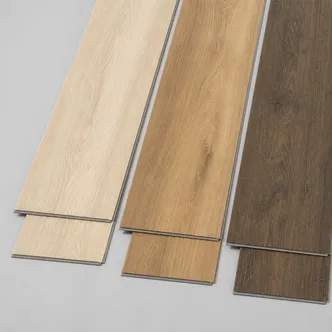
We compare production appearance with the approved reference and check EIR alignment on the run. Your joined samples also help reveal repeated grain features and the edge detail across several planks.
Your retained sample, decor reference and specification give a reorder a defined starting point. A multi-phase project should identify its complete quantity early so the production and batch plan can be reviewed together.
Thickness, layer adhesion, dimensions and visual checks support product release. Click configurations receive joint checks, and your shipment also passes packing and pre-shipment review.
Your application determines the review. We narrow the configuration and identify relevant product and installation documents.
Your palette needs to work across adjoining rooms, transitions and repeated units. A room schedule and complete phase quantities help us review the sample, packing and production references together.
Your brief can identify rolling loads, castor chairs, cleaning routines and any acoustic criteria. We check the relevant construction and reports; a wood grain or thicker wear layer alone cannot answer those requirements.
Your species, tone, reference product or target price starts the discussion. Technical choices can remain open.
Existing-decor samples dispatch within 7 days after design confirmation. You can review grain, finish and joined boards. We confirm sample selection and shipping terms; transit is additional.
Standard collections start at 1,000 m² per SKU. New print, texture-plate or dimension development needs its own minimum and schedule. Your quotation identifies the scope before artwork and sample approval.
We can include your carton design, barcodes and care instructions. Coverage, labels and pallet configuration are reviewed with your receiving requirements, with the packing plan included in the supply discussion.
Your decor reference, destination and quantity start the proposal. We clarify the construction alongside the appearance.
A shareable overview of construction choices and order scope across six series. You can use it for an initial comparison; the agreed product file defines your order.
Your proposal identifies the plank, wear layer, finish, packing, MOQ and proposed production timing, with the shipping basis stated.
FloorScore, CE, REACH and product test requirements can be included in the inquiry. We match available documents to the proposed product and origin.
Tile-effect LVT gives your range square and rectangular formats for a different design brief, with its own construction and sample choices.
Your current specification, sample reference or target price gives us a starting point. We will confirm the product, quantity basis and proposed supply terms with you.