
SPC identifies the rigid core
SPC is a rigid-core vinyl construction with a decorative surface and optional backing. Your actual product specification determines its layers and installation system.
Similar wood looks can conceal different constructions and installation requirements. Your useful comparison starts with the product build-up and fixing method, then puts the supply price beside preparation, installation and delivery costs. Elefloor supplies both routes, so the choice can follow your project or collection brief.
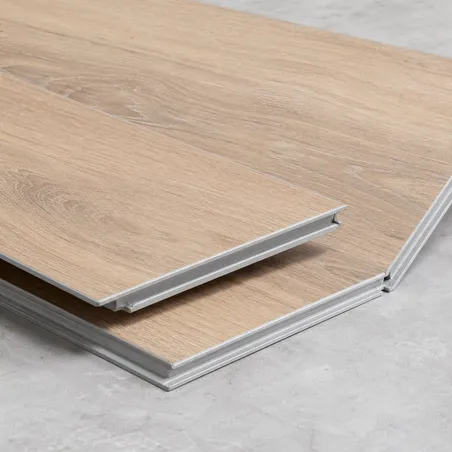
The label on a quotation should identify both the construction and the format.
SPC is a rigid-core vinyl construction with a decorative surface and optional backing. Your actual product specification determines its layers and installation system.
The term can include flexible and rigid vinyl products. In this guide, flexible LVT means the dry-back or loose-lay formats being compared with SPC.
Luxury vinyl plank describes the shape. An SPC plank can also be called rigid LVP, so those two labels do not necessarily identify competing products.
Your order needs more than a total-thickness figure.
| Buying variable | SPC rigid core | Flexible LVT |
|---|---|---|
| Body | Rigid core with the selected surface and joints. | Flexible vinyl construction in the selected fixing format. |
| Installation | Click products follow their floating-floor instructions. | Dry-back uses an adhesive-fixed system; loose-lay follows its own fixing instructions. |
| Wear layer | A separate value from core and pad thickness. | A separate value from the overall flexible construction. |
| Backing | Attached pad may form part of the quoted assembly. | The chosen format determines the underside; loose-lay backing is not an SPC acoustic pad. |
| Floor-height review | Identify complete thickness, including any pad. | Identify product thickness alongside adhesive and substrate preparation. |
| Use approval | Review the selected product and relevant test evidence. | Review the selected product, installation system and relevant evidence. |
These are Elefloor starting ranges, not a claim that every combination is available.
| Product route | Confirmed starting range | Quotation detail |
|---|---|---|
| SPC | 4–8 mm core; 0.3 / 0.5 / 0.7 mm wear layer. | Optional IXPE/EVA backing, 1–1.5 mm; exact total assembly stated separately. |
| Dry-back LVT | Typically 2–3 mm flexible construction. | Selected wear layer and adhesive-fixed installation format. |
| Loose-lay LVT | Typically 3.5–5 mm grip-backing construction. | Selected backing and the fixing requirements for the intended space. |
| LVT wear-layer range | 0.2–0.7 mm across the LVT range. | Available format, decor and wear-layer combination per SKU. |
| Standard order basis | SPC and LVT standard collections start at 1,000 m² per SKU. | Quantity per decor, packaging and any mixed-order arrangement. |
Your installer and project team need the same product instructions as your purchasing team.
| Question to resolve | Why it changes the comparison | Information to review |
|---|---|---|
| What is the existing substrate? | Preparation remains relevant to both routes; a rigid core does not replace the required checks. | Flatness, moisture and permitted substrate in the chosen instructions. |
| Is a fixing method already specified? | An adhesive-fixed brief and a floating-floor brief carry different requirements. | Project specification, adhesive system where applicable, and expansion details. |
| What traffic will the floor see? | Footfall, rolling loads and furniture affect the evidence needed for approval. | Intended use and reports for the actual construction. |
| Is an acoustic result required? | The tested floor assembly matters, including substrate and other layers. | A relevant report; pad material alone cannot establish the result. |
Your comparison is useful when both proposals cover the same scope.
Your factory quotation needs the construction, quantity per decor and branded packing scope. A target selling price helps frame the product recommendation; it does not establish your achieved margin.
Your budget separates material from preparation, adhesive or underlay, installation and transitions. Local labor and site conditions determine those costs; one product label cannot establish the cheaper installed floor.
Your landed-cost comparison adds freight and import charges to the product price. Eligible Thailand-origin SPC can offer a U.S. tariff opportunity, subject to classification, origin and entry-date rules; this does not establish a general LVT or other-market saving.
A shared wood look does not make the products equivalent.
Your sample review covers surface, edge, joints or backing and the proposed plank or tile size.
Your approval file identifies the construction, relevant reports and installation requirements. A different tested assembly may not answer your project requirement.
Your quotation records quantity, packing, origin and timing. Standard SPC and existing-decor LVT samples dispatch within 7 days after design confirmation; shipping arrangements and transit are separate.
Your current specification, sample reference or target price gives us a starting point. We will confirm the product, quantity basis and proposed supply terms with you.